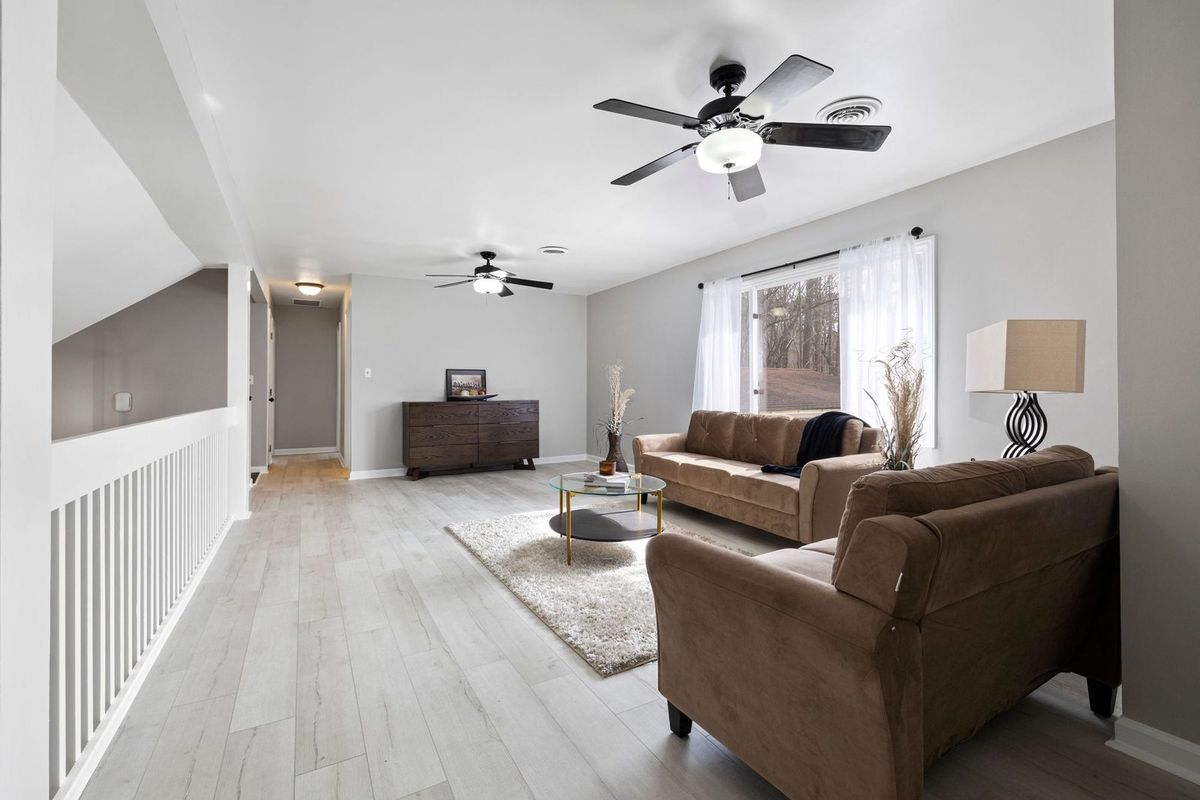
What dogs do to floors
Three things: scratch with nails, wet with water bowls, accidents and paws from the yard, and dent with dropped bones and dragged crates. Hardwood loses on all three. Carpet absorbs the second and holds odor. Floors that win are chosen for a hard, thick wear layer, a waterproof core and a finish that hides fine marks.
The product that works
Rigid-core luxury vinyl plank with a 20-mil or thicker wear layer, on an SPC core that resists dents, in a matte, textured, mid-tone finish. Attached pad or an added underlayment for sound, because dog nails on a hard floor over a hollow subfloor are loud. AC5 laminate is the alternative for smaller dogs in dry living areas.
Layout for pets
The entry, the dog door, the kitchen and wherever the water bowl lives get waterproof plank regardless of the rest of the house, with flush transitions so a floor change is not a tripping edge. Where the house mixes laminate and vinyl, both are chosen together so they read as one floor.
Installation details that matter
Seams tight and planks fully locked, so water cannot find a way to the subfloor. Transitions and quarter round caulked. Flush, flooring-matched vents instead of metal registers that catch hair. Felt pads under furniture on install day. And a box of attic stock left behind, because a click-lock floor is repairable plank by plank only if the matching plank exists.
Rentals that allow pets
Landlords who allow dogs put in 20-mil vinyl plank across every unit, standardize the product, and keep attic stock. Damage at move-out becomes a per-plank repair quote rather than a new floor, which is a very different conversation about the deposit.
On the quote
The product and wear layer by name, underlayment, removal of the old floor, subfloor prep, transitions and trim, stairs, flush vents if chosen, attic stock, and labor. Approved in writing before anything is ordered.